
Homes should be comfortable, functional, and safe for everyone — whether you’re planning for aging in place, supporting family members with mobility challenges, or simply enhancing day‑to‑day living. Universal design remodeling focuses on inclusive upgrades that improve accessibility without sacrificing style.
As the population ages and more people embrace multigenerational living, universal design has become a major trend in home remodeling. These upgrades help homeowners future‑proof their spaces while adding value, comfort, and safety.
What Is Universal Design?
Universal design refers to planning and remodeling spaces so they are usable for people of all ages and physical abilities. Rather than addressing a specific disability, universal design adapts homes to remain comfortable and functional throughout life’s changes.
According to AAHOA, universal design principles help reduce barriers and support independence. Whether you’re upgrading for longevity or convenience, these concepts improve everyday life for residents and guests.
Key Universal Design Principles for Remodeling
Universal design projects don’t require dramatic changes. Many improvements are subtle, practical, and stylish. The main goal is ease of use, flexibility, and safety.
- Flexibility in use: Features that accommodate a wide range of users.
- Simple and intuitive: Intuitive layouts that are easy to navigate.
- Low physical effort: Reducing strain with easy‑to‑use fixtures and fittings.
- Size and space for approach: Wider doorways, smoother transitions, and accessible zones.
Accessible Entryways and Hallways
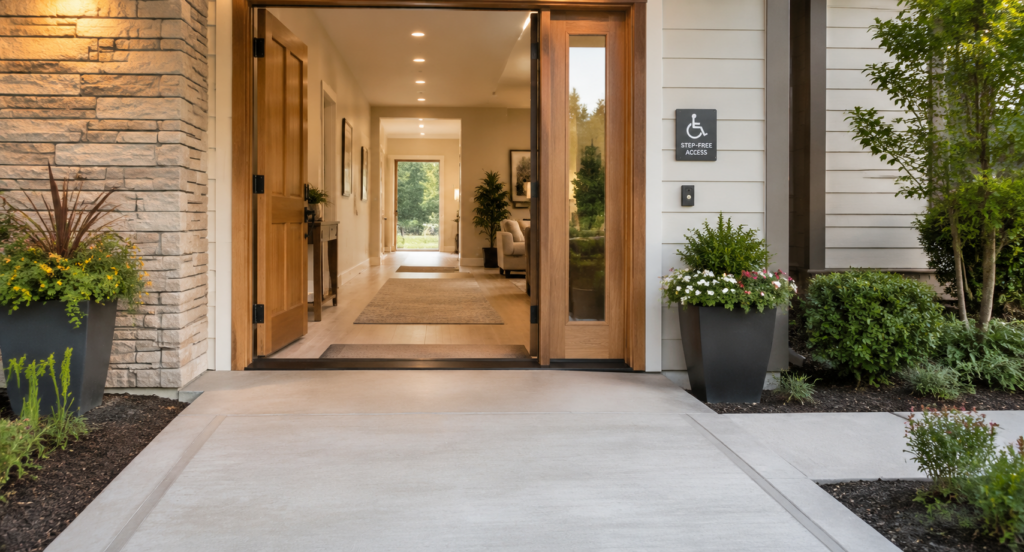
One of the most impactful and visible universal design upgrades is creating accessible entry points. This includes step‑free walkways, smooth thresholds, and wider doorways so wheelchairs, walkers, and strollers move easily.
According to Usability.gov, removing barriers at entry points increases safety and convenience, especially for older adults or anyone with mobility challenges.
Safe and Stylish Bathrooms
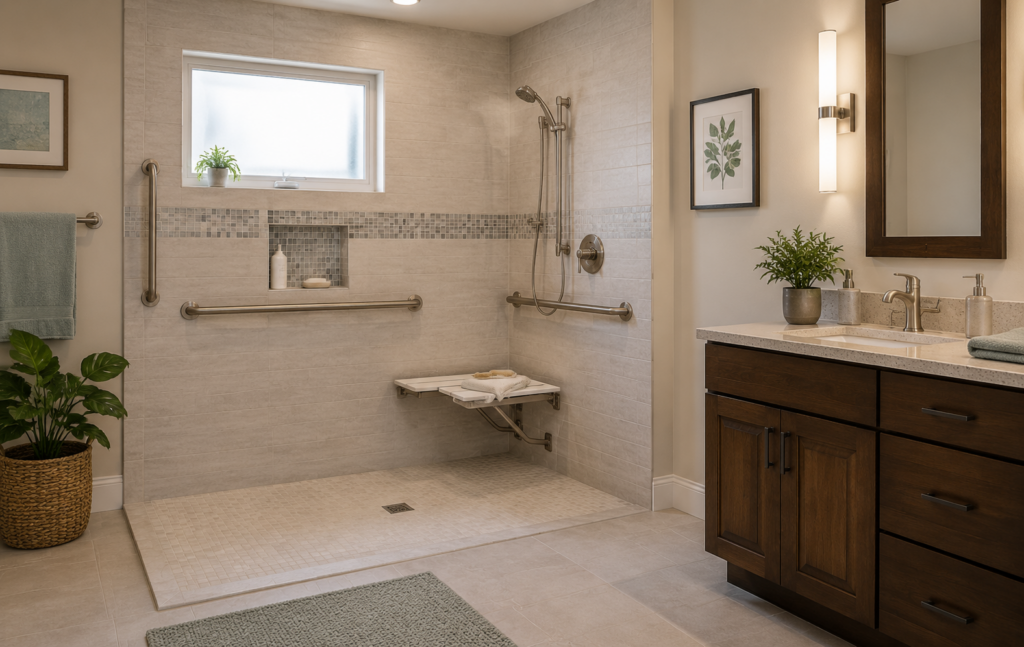
Bathrooms often require the most thoughtful universal design planning. A few proven upgrades include:
- Walk‑in showers with zero thresholds
- Slip‑resistant flooring
- Grab bars near toilets and tubs
- Comfort‑height toilets
These features improve safety while preserving aesthetics. You can also pair these upgrades with energy‑efficient fixtures and modern designs that blend seamlessly with the rest of your home.
Universal Kitchens With Every User in Mind
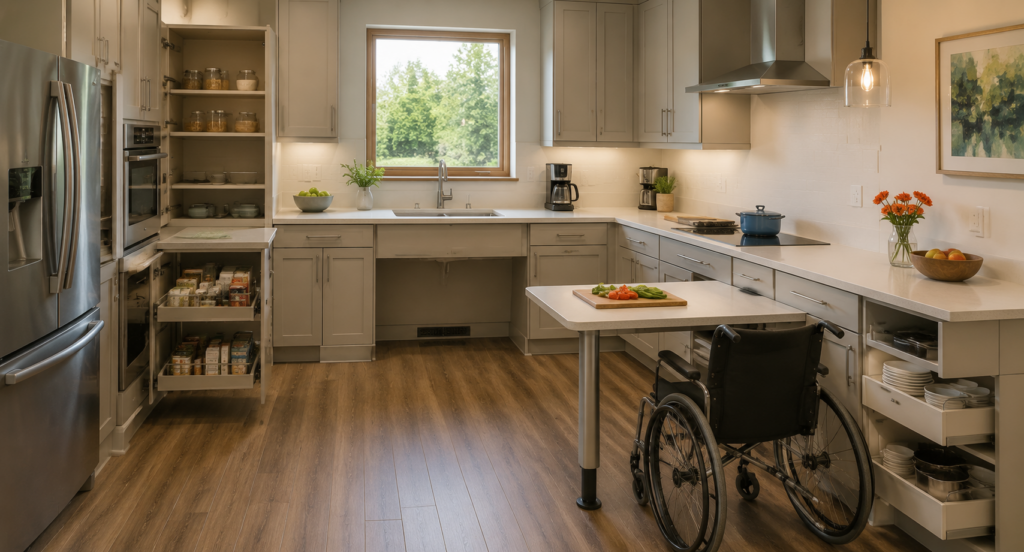
Kitchens are the heart of the home, and universal design can enhance both functionality and comfort. Consider features like:
- Adjustable‑height countertops
- Pull‑out shelves
- Easy‑to‑reach controls
- Anti‑glare lighting
Remodeling your kitchen with accessibility in mind doesn’t mean reducing style. Instead, it enhances usability for helpers and family members of all abilities.
Open Layouts and Clear Sight Lines
Open layouts and thoughtful traffic flow can make spaces easier to navigate. Universal design encourages removing unnecessary barriers, creating intuitive paths through living rooms, kitchens, and common areas.
These upgrades also improve natural light, ease of movement, and real estate value — which is why many modern remodeling trends emphasize open, flexible designs.
Bedrooms Designed for Comfort and Safety
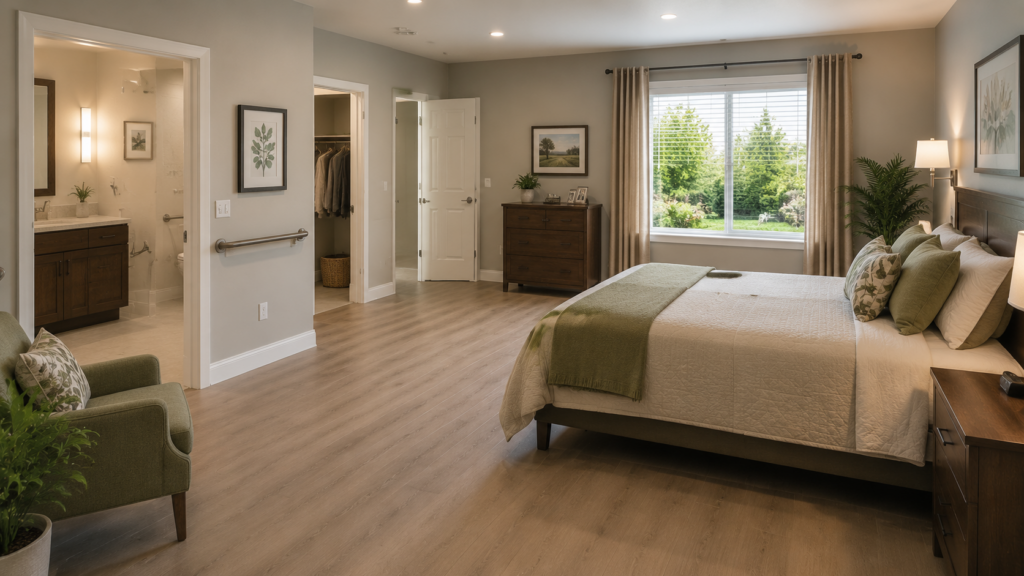
Bedrooms benefit from universal design by ensuring wide pathways, accessible closets, and minimal steps. Thoughtful lighting, clear zones, and easy‑to‑operate hardware make these spaces more peaceful and functional.
For more ideas on redesigning your living spaces, you might also enjoy our guide on renovation vs. restoration.
Smart Home Technology for Accessibility
Smart home technology pairs perfectly with universal design. Voice‑activated assistants, automated lighting, and smart climate control can make everyday routines easier for older adults or anyone with limited mobility.
According to CNET Smart Home, integrating smart technology into your remodeling can improve convenience and safety while future‑proofing your home.
Benefits of Universal Design Remodeling
Beyond accessibility, universal design brings many benefits:
- Increased resale value — accessible homes appeal to broader buyer pools.
- Better comfort — improved ergonomics and ease of use.
- Enhanced safety — reduced risk of slips, trips, and falls.
- Longevity — supports aging in place without costly changes later.
Many homeowners find that universal design upgrades are not just functional — they also make homes more stylish and modern.
Getting Started With Your Project
Universal design remodeling requires thoughtful planning. Start by:
- Assessing your goals — identify priority areas for updates.
- Consulting professionals — work with experienced designers and contractors.
- Combining aesthetics with accessibility — choose materials and finishes that match your home’s style.
- Planning budget and timeline — get estimates and set realistic expectations.
Conclusion
Universal design remodeling is more than a trend — it’s an investment in comfort, safety, and long‑term livability. With thoughtful upgrades, your home can be accessible and enjoyable for every family member, no matter their age or ability.
Whether you’re planning a bathroom renovation, kitchen upgrade, or a whole‑home redesign, incorporating universal design principles will make your space more inclusive and future‑ready.